Test one small mark
before highlighting a page.
A “Bible-safe” label can’t account for every paper, ink, and amount of pressure.
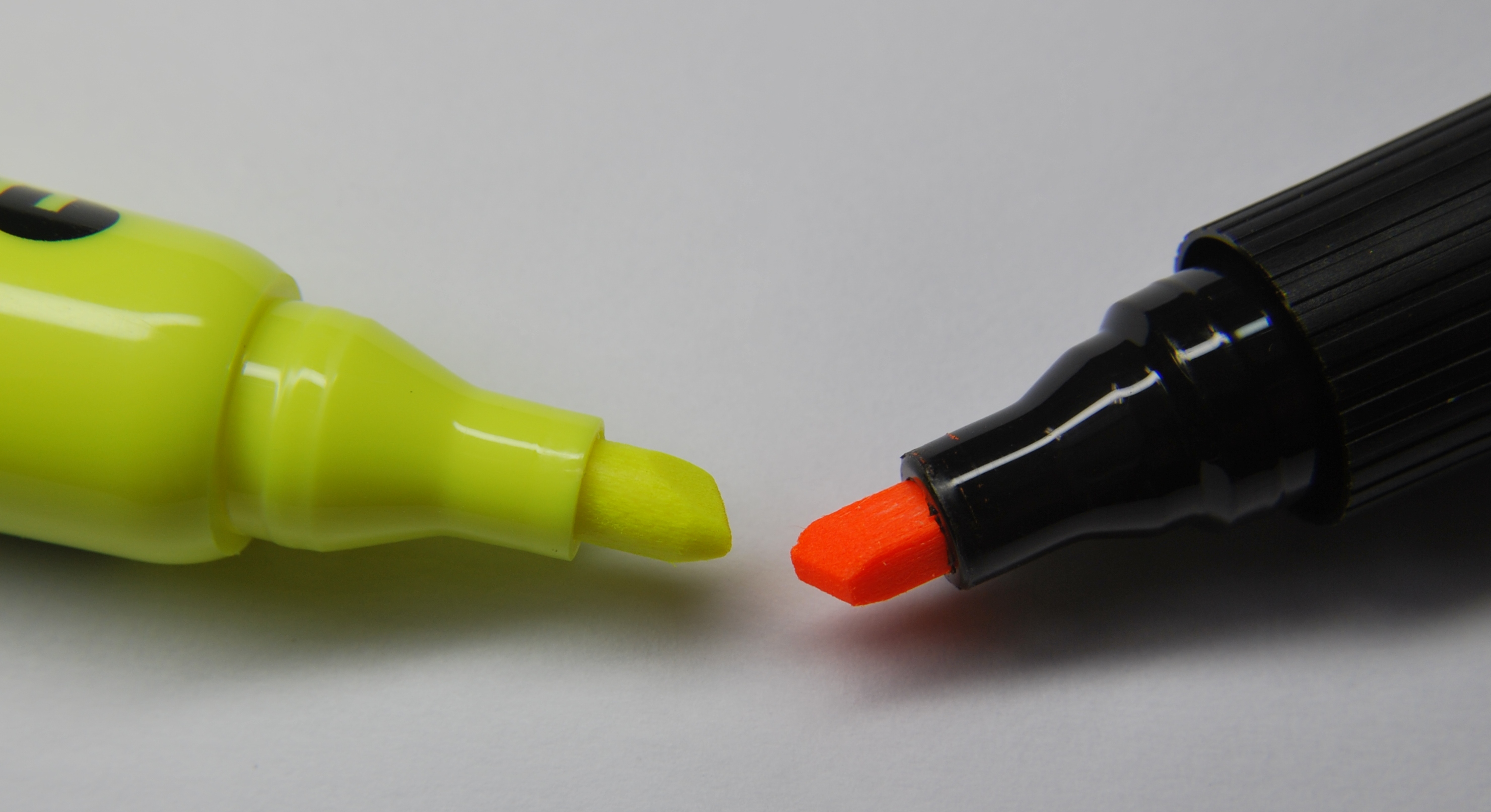
Show-through and bleed-through are different
Thin paper may let you see a mark on the other side without the ink having soaked through. That is show-through. Bleed-through leaves ink in or on the reverse surface. Both can be distracting, so judge the page from both sides after the mark has settled.
What to try
A dry highlighter pencil leaves a colored wax mark without liquid ink. A gel highlighter uses a soft solid stick. These can be useful alternatives to a wet felt-tip marker, though they feel different on the page and may leave a thicker mark. Test in a blank or otherwise suitable part of your own edition before marking text you want to keep clean.
STAEDTLER Textsurfer dry 128 64
A wood-cased highlighter pencil with a fluorescent wax core. The manufacturer lists it for thin paper, including Bible pages. Check the sharpener size; the barrel is larger than a regular pencil.
Manufacturer information ↗STAEDTLER Textsurfer gel
A twist-up wax-based highlighter. Compare the feel and line width with a dry pencil before committing to a set. Use light pressure on thin sheets.
Manufacturer range & gel details ↗A five-minute paper test
- Choose a discreet blank area where a permanent mark is acceptable. A separate sheet of different paper won’t prove how your Bible will behave.
- Support the page underneath and draw one short stroke with light pressure.
- Let the mark settle, then inspect the back and the next sheet.
- Check whether the marking smears or transfers when pages touch.
- If it obscures reading, use a pencil note in a notebook or a removable bookmark instead.
You don’t need a complicated color code. Start with one color for a passage you want to return to, and put longer notes somewhere with enough room to write.